
Membrane Cleaning and Care for TPO and EPDM Commercial Roofs
- Superior Roofing

- Jun 4
- 6 min read

Quick Answer: TPO and EPDM membrane maintenance in Calgary involves annual cleaning to remove biological growth and contamination, quarterly seam inspection, and immediate repair of any punctures or bruises. Use low-pressure water and manufacturer-approved cleaners only; never pressure wash above 1,200 psi or use solvents not specified by the membrane manufacturer. Proper care extends single-ply system life to the full 25 to 30-year manufacturer rating.
Single-ply membrane systems are Calgary's most common commercial roofing choice on buildings built or re-roofed since 2000. TPO and EPDM each have distinct material chemistry, and the cleaning and repair compatibility rules differ. This article walks through the maintenance practices that preserve manufacturer warranties and extend system life, focusing on the field membrane and seam care that quarterly inspections should cover.
At a Glance
Quick Facts:
TPO surface: White thermoplastic, heat-welded seams, reflective
EPDM surface: Black synthetic rubber, taped or adhered seams, absorptive
Recommended cleaning frequency: Annual full surface cleaning
Maximum cleaning pressure: 1,200 psi (TPO), 800 psi (EPDM)
Seam inspection frequency: Quarterly
Field membrane lifespan (maintained): 25 to 30 years
UV degradation onset (Calgary): 10 to 15 years on TPO; 15 to 20 years on EPDM
Understanding TPO vs EPDM Maintenance Differences
TPO (Thermoplastic Polyolefin) and EPDM (Ethylene Propylene Diene Monomer) are both single-ply membranes, but they behave differently and require different maintenance attention.
TPO is heat-weldable
Seams are hot-air welded on installation, creating a homogeneous bond. Repairs use the same hot-air welding process. The white surface reflects solar gain (typical solar reflectance 70%+) but chalks and oxidizes under UV over 10 to 15 years.
EPDM is adhesive-bonded
Seams use seam tape or contact adhesive. Older EPDM (pre-2000) often used liquid adhesives that degrade over 15 to 20 years; modern systems use factory-applied seam tape with longer service life. The black surface absorbs solar gain (poor summer performance, good winter snow melt) and remains flexible across temperature ranges.
These differences drive different inspection priorities. TPO inspection focuses on weld integrity and surface chalking; EPDM inspection focuses on seam tape condition and surface drying.
Field Membrane Inspection
Walking the entire roof surface during each quarterly visit catches developing issues before they become leaks.
Punctures and bruises
Look for circular dents (often from dropped tools), star-shaped impact patterns (hail strikes), and clean cuts (foot traffic or service technician damage). Photograph and mark the location on a roof plan.
Blisters
Trapped air or moisture under the membrane causes raised areas. Small blisters (under 10 cm) often don't require repair but should be tracked. Large blisters (over 20 cm) indicate adhesion failure and need repair.
Surface degradation
TPO chalking shows as a powdery white residue when rubbed with a glove. EPDM drying shows as a grey, less-flexible surface. Both indicate UV degradation past the 10 to 15 year mark.
Seam separations
Edge curling, visible gaps, or sealant fatigue at seams. Test suspect seams with a blunt tool to check bond strength.
Contamination
Petroleum products, plasticizers from incompatible materials, or biological growth. Each requires a different cleaning approach.

Cleaning TPO Membranes
TPO is more forgiving of cleaning than EPDM but still requires manufacturer-compatible methods.
Recommended cleaning equipment:
Low-pressure water at 800 to 1,200 psi maximum
Soft-bristle deck brush for stubborn areas
Manufacturer-approved cleaners (typically Carlisle SynTec or Holcim Elevate-branded TPO cleaners)
Wet/dry vacuum or squeegee for water removal in low-slope areas
Cleaning procedure:
Pre-wet the entire surface to prevent cleaner concentration. Apply cleaner per manufacturer instructions (typically diluted, not concentrated). Soft-brush stained or contaminated areas. Rinse thoroughly to remove all cleaner residue. Squeegee any standing water toward drains. Allow to dry before applying any walking pads or equipment.
What not to use:
Pressure washers above 1,200 psi (can damage the membrane surface)
Solvent-based cleaners not specified by the manufacturer (can dissolve plasticizers)
Wire brushes or abrasive pads (scratch the surface and accelerate UV degradation)
Bleach in concentrations above manufacturer specification (can chemically attack the membrane)
Cleaning EPDM Membranes
EPDM is more sensitive to cleaning chemistry than TPO. Plasticizer migration is a real concern.
Recommended cleaning equipment:
Low-pressure water at 600 to 800 psi maximum
Soft cotton mop or soft-bristle deck brush
Manufacturer-approved EPDM cleaners (Carlisle SynTec EPDM Membrane Cleaner is the most common)
Garden sprayer for cleaner application
Cleaning procedure:
Pre-wet the surface. Apply cleaner with garden sprayer or mop. Allow contact time per manufacturer specification (typically 5 to 15 minutes). Light brushing on contaminated areas. Rinse thoroughly. Drying is naturally slower on black EPDM; allow 1 to 2 hours of clear weather before applying foot traffic.
What not to use:
Petroleum solvents of any kind (will rapidly degrade EPDM)
Plasticizer-containing products (vinyl repair compounds, PVC cleaners, automotive products)
Citrus-based cleaners (some contain solvents incompatible with EPDM)
Pressure washers above 800 psi
Any product not specifically labelled EPDM-compatible
Seam Inspection and Care
Seam failures are the most common single-ply leak source after equipment penetrations.
TPO seam inspection
Visual check for weld separation, edge lifting, or visible gaps. Probe-test suspect seams with a blunt tool. Failed welds can be repaired by hot-air re-welding using compatible material.
EPDM seam inspection
Visual check for tape lift, sealant fatigue at seam edges, and any visible adhesive failure. Probe-test seams every 5 years on systems over 10 years old. Failed seam tape can be repaired with manufacturer-approved patches.
Documentation
Photograph every seam concern with location reference. Year-over-year comparison helps identify slowly developing issues before they fail.
Repair Compatibility: Matching Material to Manufacturer
Repair material compatibility is a warranty issue. Mixing manufacturers or using generic repair products often voids the NDL warranty for the affected area.
TPO repair material
Use the same manufacturer's TPO patch material and bonding adhesive. Carlisle SynTec TPO repairs use Carlisle materials; Holcim Elevate uses Elevate materials; Duro-Last uses Duro-Last materials. Heat welding is the standard joining method.
EPDM repair material
Use the same manufacturer's EPDM patch material, primer, and seam tape. Carlisle SynTec is the dominant Calgary EPDM brand; their EP95 patch and Quick-Seam tape system is the typical repair method.
When to use field-formed vs prefabricated patches
Small repairs (under 30 cm) typically use prefabricated material cut on site. Larger areas may use field-formed patches for material economy. Both require manufacturer-specific procedures.
UV Protection and Surface Treatments
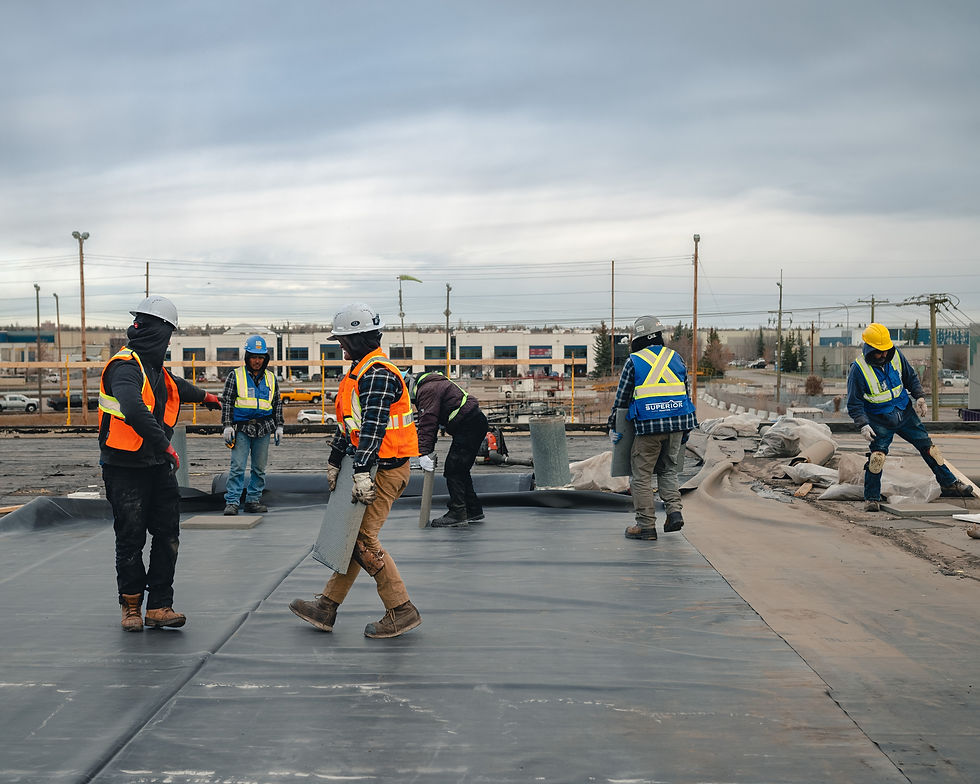
Aging TPO and EPDM can benefit from surface treatments before replacement. Proper membrane cleaning and care for TPO and EPDM helps remove buildup, maintain performance, and identify early signs of wear.
TPO acrylic recoat
White acrylic coatings applied to aged TPO can extend service life by 5 to 10 years while restoring reflectivity. Manufacturer-specified products only.
EPDM solvent-based coatings
Specialty coatings designed for aged EPDM can restore surface flexibility and extend life. Less common than TPO recoats but available.
Reinforcement at high-stress areas
Aging systems can have seams reinforced with cover strips before failure rather than waiting for repair.
These treatments are evaluated case-by-case. A maintenance contractor should track surface condition year over year and recommend treatment when the cost-vs-replacement math favours it.
Frequently Asked Questions
How often should TPO or EPDM membrane be cleaned?
Annual full-surface cleaning is the typical maintenance recommendation. Buildings with heavy environmental contamination (industrial dust, restaurant kitchen exhaust, automotive parking) may need semi-annual cleaning. Spot cleaning of biological growth or contamination as identified during quarterly inspections.
Can I use a regular pressure washer to clean my commercial roof?
No. Standard pressure washers (1,500 to 3,000 psi) damage both TPO and EPDM surfaces. Use 1,200 psi maximum for TPO and 800 psi maximum for EPDM. Manufacturer-specific cleaning is recommended for warranty preservation.
How long do TPO and EPDM membranes last in Calgary?
With proper maintenance, 25 to 30 years for both systems. TPO chalking and oxidation typically begin at 10 to 15 years in Calgary's high-altitude UV. EPDM drying typically begins at 15 to 20 years. Both can be extended with surface treatments before replacement.
What if my building has TPO from a different manufacturer than my current roofer carries?
Most reputable Calgary commercial roofers maintain certifications across multiple manufacturers, including Carlisle SynTec, Holcim Elevate, and Duro-Last. For warranty preservation, the repair contractor needs the specific manufacturer certification. Mixed-manufacturer repairs typically void warranty coverage on the repaired area.
Does cleaning the membrane affect the warranty?
Done properly with manufacturer-approved methods and products, no. Done improperly (high-pressure washing, incompatible cleaners, abrasive tools), it can. Documentation of cleaning method and products used should be retained as part of the maintenance file.

About Superior Roofing: Superior Roofing Ltd. provides Calgary commercial roof maintenance throughout the city, specializing in TPO and EPDM membrane care with manufacturer-certified repair procedures for Carlisle SynTec, Holcim Elevate, and Duro-Last systems delivered by Red Seal Journeymen for property managers requiring trusted, warranty-preserving single-ply maintenance.
Ready to extend your Calgary commercial single-ply membrane to its full rated life? Superior Roofing helps Calgary property managers preserve manufacturer warranties through proper cleaning, seam care, and repair procedures backed by 25+ years of local experience and $10 million general liability insurance.
Contact us today at 403-464-3812 to book your free Calgary commercial roof maintenance consultation.
Disclaimer: Roofing involves safety risks; consult licensed professionals for work beyond ground-level visual checks. Costs and specifications provided are estimates based on typical Calgary market conditions and may vary based on specific project requirements and current material pricing.


Comments