
Siding Damage from Hail: Repair and Insurance Claims
- Superior Roofing

- 12 hours ago
- 7 min read

Quick Answer: Calgary hail damages siding when stones reach 25 mm or larger, which happens 8 to 12 times per summer. Document damage within 48 hours with timestamped photos, file insurance claims with HAAG-certified inspection support, and bundle siding claims with roof claims from the same storm for stronger coverage. Standard vinyl typically requires replacement after 30 mm hail; Hardie and Class 4 impact-rated vinyl often need only spot repair.
Hail damage to siding is a Calgary reality, not a remote possibility. The Insurance Bureau of Canada has documented Alberta as the consistent Canadian leader in hail insurance claims, with Calgary specifically generating major claim volumes in 2020, 2022, and 2024. When stones hit your home, the next 48 hours determine whether your insurance claim succeeds and whether you get matched repair or a colour-mismatched patch. This guide walks through identification, documentation, claims, and repair decisions.
At a Glance
Quick Facts:
Damaging hail threshold: 25 mm (quarter-size)
Standard vinyl cracking threshold: Approximately 30 mm
Insurance documentation window: Best within 48 hours
HAAG-certified inspection: Often required for Calgary claims
Average Calgary hail events per summer: 8 to 12
Combined roof + siding claim advantage: Stronger total payout
What Calgary Hail Damage Looks Like on Siding
Different siding materials show hail damage in characteristic ways. Knowing what to look for separates real damage from existing wear.
Vinyl siding hail damage:
Cracks along impact lines (often horizontal stress fractures)
Punctures or holes from larger stones
Stress whitening (lighter marks at impact points without full cracks)
Panel separation from J-channels or corner posts
Loose or popped-out panels after wind following the hailstorm
Hardie board hail damage:
Surface chipping or paint damage at impact points
Hairline cracks (rare; requires significant impact)
Cracked corner trim or window trim (more vulnerable than main boards)
Cedar siding hail damage:
Visible dents or splits in shingles or bevel boards
Lifted shingle tabs from edge impacts
Cracked tongue-and-groove boards
Stucco hail damage:
Cracking around impact zones
Surface chipping or pock-marking
Larger spalling chunks on direct hits from 40 mm-plus stones
Walk the perimeter of the home after any hail event with stones above 20 mm. Focus on west, south, and southwest elevations, which take the worst of Calgary's typical hailstorm wind patterns.
How to Document Damage for Insurance
The 48-hour window matters. Documentation done quickly supports stronger claims.
Step 1: Date and time stamp.
Take photos with date/time metadata enabled on your phone. Cloud backup helps establish the timeline if the claim is contested.
Step 2: Multiple angles per damage point.
One wide shot showing the whole elevation, one mid-range shot of the damaged area, one close-up of each significant impact. Insurance adjusters need context plus detail.
Step 3: Hailstone evidence.
If you can find hailstones on the ground or roof, photograph them next to a coin or ruler for size reference. Environment and Climate Change Canada or local news weather reports can corroborate the storm size.
Step 4: Roof damage at the same time.
Hail that damages siding almost certainly damaged the roof. Document both. Combined claims typically have stronger outcomes than separate claims for the same event.
Step 5: Interior consequences.
Any leaks, water staining, or interior damage that resulted from hail impact. Photograph these immediately.
Step 6: Pre-existing condition reference.
If you have photos of the home from before the storm (real estate listing, family photos, Google Street View), bookmark them. Adjusters use them to separate storm damage from existing wear.

The Insurance Claims Process for Siding
The typical claim flow in Calgary.
Notify your insurance carrier promptly. Most policies require notification within 30 days of damage; sooner is better. Provide the storm date, brief description, and request a claim number.
Adjuster inspection
The carrier sends an adjuster to inspect, usually within 1 to 4 weeks of the claim opening. In high-volume hail events (post-major storm), this can stretch to 6 to 10 weeks.
Independent inspection (recommended)
Get an independent HAAG-certified inspection alongside the adjuster's. HAAG (Haag Engineering) certification is the industry standard for hail damage assessment and is recognized by Alberta insurance carriers. An independent HAAG report supports your claim if the adjuster's findings are incomplete.
Estimate review
The adjuster provides a repair estimate. Compare against contractor quotes; the adjuster's estimate is often conservative. Disputes are common and resolvable.
Supplemental claims
If demolition reveals additional damage (substrate rot, hidden panel cracks), file a supplemental claim before completing repairs. Don't pay out of pocket and try to reclaim later.
Approved scope and payment
Once scope is agreed, the carrier issues payment (often in two stages: initial deposit and final upon completion). Some carriers pay the contractor directly.
Repair vs Replace: The Decision Framework
Not every hailstorm requires full replacement.
Repair appropriate when:
Damage is concentrated on one elevation (typically west or south)
Affected panels can be matched in colour and profile
Panel supply chain has the original product available
Substrate is sound
Replacement appropriate when:
Damage spans multiple elevations significantly
Colour matching is impossible (discontinued product, faded original)
Substrate damage requires full siding removal anyway
More than 30% of panels need replacement
Repeated hail events have accumulated damage
Insurance matching coverage. Some policies cover full elevation replacement when colour matching isn't possible. The adjuster may push for spot repair; if the result will be visibly mismatched, push back with documentation of matching limitations.
Calgary's vinyl siding from 5-plus years ago often has discontinued colour codes. New panels in the same nominal colour rarely match faded original panels exactly. This is a legitimate argument for elevation replacement.
HAAG Certification: Why It Matters for Calgary Claims
HAAG-certified inspection is the industry standard for hail damage assessment and is recognized by Alberta insurance carriers as authoritative documentation.
What HAAG inspection provides:
Standardized damage assessment methodology
Detailed photo documentation per industry standards
Hail size impact analysis
Material-specific damage interpretation
Written report admissible to insurance carriers
When to request HAAG inspection:
Major hail event (40 mm-plus stones)
Adjuster's initial assessment seems incomplete
Claim dispute requires independent documentation
Pre-claim self-assessment to decide whether to file
Several Calgary roofing contractors have HAAG-certified inspectors on staff (Superior Roofing among them). The inspection is often free for homeowners considering filing a claim, with the inspection cost recoverable through the claim if it proceeds.
Common Calgary Hail Claim Mistakes
Five mistakes that weaken or sink legitimate claims.
Waiting too long to document. Damage that's documented 3 months after the event is harder to attribute to a specific storm. The 48-hour window is the gold standard.
Filing separate claims for siding and roof. Both were damaged by the same storm. Combined claims are stronger and usually faster.
Accepting the first estimate without question. Adjuster estimates are often conservative. Contractor quotes and HAAG inspection provide leverage for negotiation.
Repairing before approval. Insurance won't reimburse repairs completed before claim approval and scope agreement. Stabilize emergency damage but don't complete repairs preemptively.
Choosing a contractor based on storm-chasing solicitation. After major Calgary hailstorms, out-of-province contractors flood the city offering "free roofs" and "no deductible" deals. Many disappear after collecting insurance payouts. Use established Calgary contractors with local references and physical addresses.
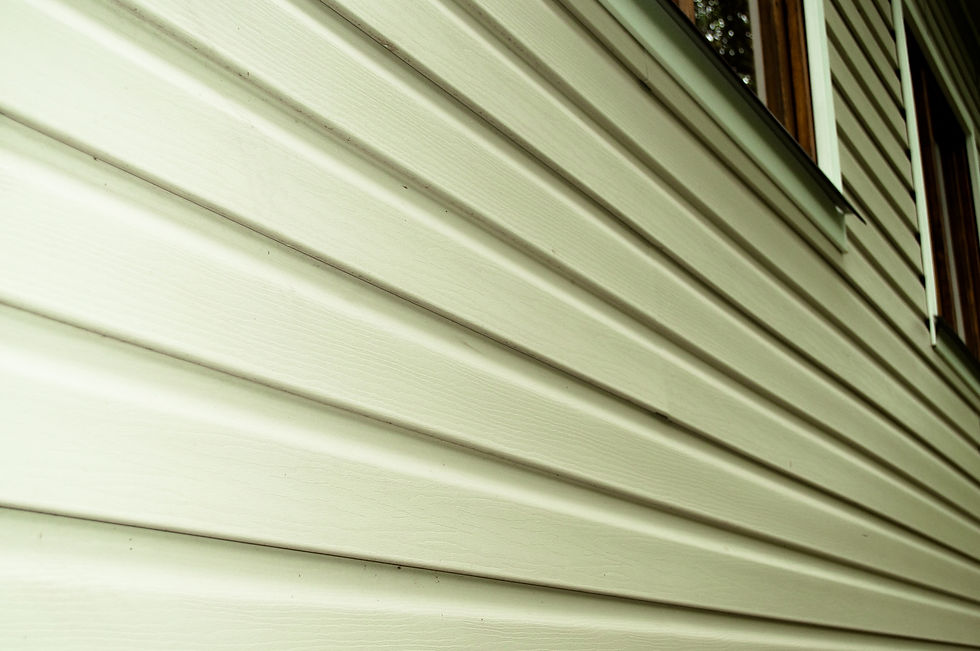
After Repair: Document and Upgrade
When the repair is complete, two final steps can help protect future claims—especially if your siding damage from hail was part of the original loss.
Document the finished work
Photos of the completed siding from each elevation, dated, with reference to the claim number. These become your new "pre-damage" baseline.
Consider an impact-rated upgrade
If you're replacing significant siding anyway, the marginal cost to upgrade to Class 4 impact-rated panels is modest (often $1,000 to $3,000 on a partial replacement). The upgrade qualifies for ongoing insurance discounts and reduces future claim frequency.
Calgary's hail patterns aren't going away. Insurance Bureau of Canada data consistently shows Alberta leading the country in hail claim severity. Every repair is an opportunity to upgrade defensively for the next storm.
Frequently Asked Questions
How big does hail need to be to damage siding in Calgary?
Stones 25 mm (quarter-size) and larger begin causing visible damage. Standard vinyl cracks reliably at 30 mm and above. Hardie board and Class 4 impact-rated vinyl resist most stones up to 50 mm. Stones 40 mm and larger cause significant damage to most siding materials.
How long do I have to file an insurance claim after Calgary hail?
Most policies require notification within 30 days of damage. Some allow longer windows, but earlier notification supports stronger claims. Documentation done within 48 hours of the storm strengthens the timeline significantly.
Does insurance always cover siding hail damage?
Most Calgary homeowner policies cover hail damage as a named peril. Coverage applies when damage exceeds the deductible and crosses functional thresholds (not purely cosmetic). Specific terms vary by policy; review your declarations page before filing.
Will my premium go up after a hail claim?
Single-event hail claims often don't directly increase premiums in Alberta, given how widespread hail exposure is. Repeated claims (3 or more in 5 years) may affect renewability or pricing. Discuss with your broker before filing for marginal damage.
Can I file a claim for purely cosmetic siding damage?
Most policies require functional damage (cracks, holes, panel displacement) to trigger coverage. Cosmetic-only damage (stress whitening without cracks) is typically excluded. Hardie board chipping that exposes substrate is functional; surface dents on aluminum trim are usually cosmetic.

About Superior Roofing: Superior Roofing Ltd. provides Calgary residential siding installation throughout the city, specializing in HAAG-certified hail damage inspection, insurance claim support, and matched-replacement siding repair delivered by Red Seal Journeymen for homeowners requiring trusted, claim-tested storm response.
Ready to assess Calgary hail damage to your siding before the next storm season? Superior Roofing helps Calgary homeowners file stronger insurance claims and complete matched repairs backed by 25+ years of local experience, HAAG-certified inspection, and $10 million liability coverage.
Contact us today at 403-464-3812 to book your free residential siding inspection.
Disclaimer: Roofing involves safety risks; consult licensed professionals for work beyond ground-level visual checks. Costs and specifications provided are estimates based on typical Calgary market conditions and may vary based on specific project requirements and current material pricing.


Comments